On this page
What is BPC-157, and what is it used for?
BPC-157 is a synthetic peptide containing 15 amino acids. Research has examined its effects on tissue repair, including tendon, ligament, muscle and gastrointestinal injury models.1245
People researching it usually want to know three things: which effects have been observed, how product amounts compare, and what the documentation actually verifies. This guide connects those questions to the relevant studies, calculations and product pages.
Which BPC-157 products and strengths are available?
The four formats below contain different total amounts. Compare the whole container and the amount per capsule, spray or mL before comparing price or preparation.
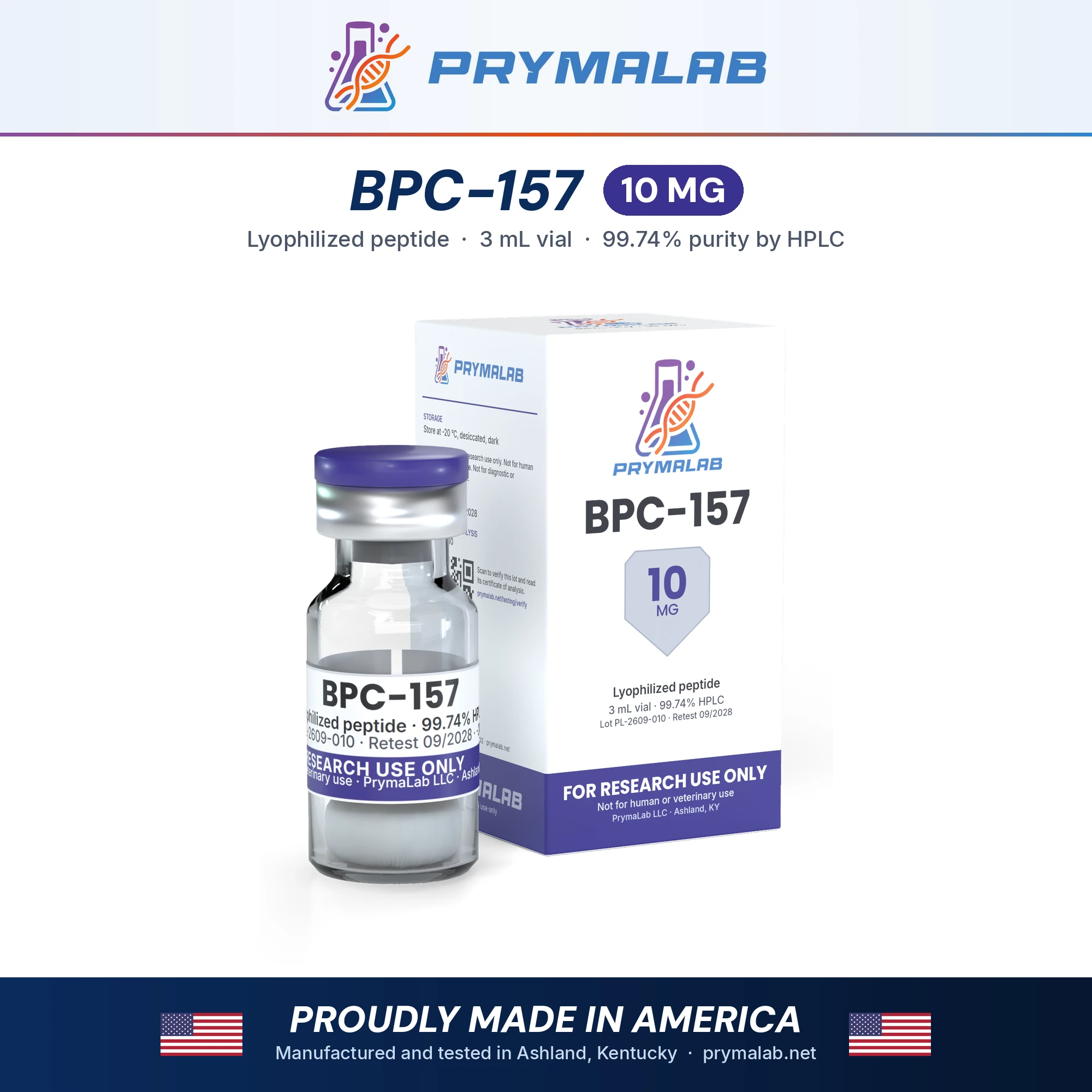
BPC-157 10 mg
10 mg of freeze-dried BPC-157 powder. Original COA for lot PL-2609-010 included.
- Total BPC-157
- 10 mg
- Physical form
- Powder
- Preparation
- Reconstitution required
- Documented lot
- PL-2609-010
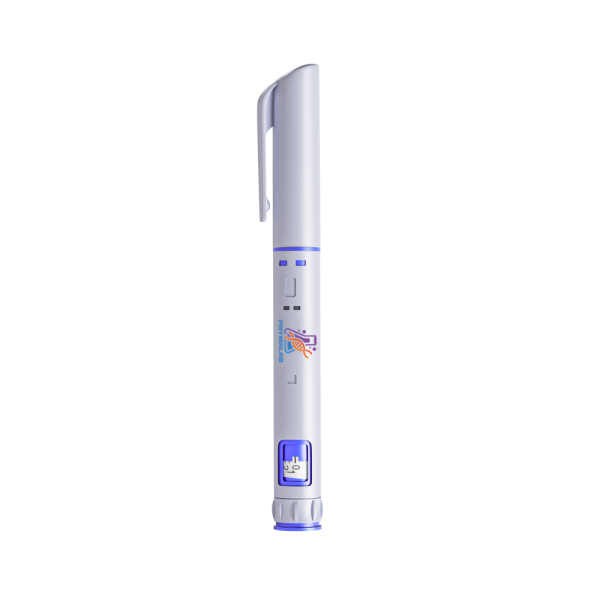
BPC-157 15 mg Pen
15 mg in a 3 mL prefilled pen. Concentration: 5 mg/mL.
- Total BPC-157
- 15 mg
- Liquid volume
- 3 mL
- Concentration
- 5 mg/mL
- Preparation
- Already in solution
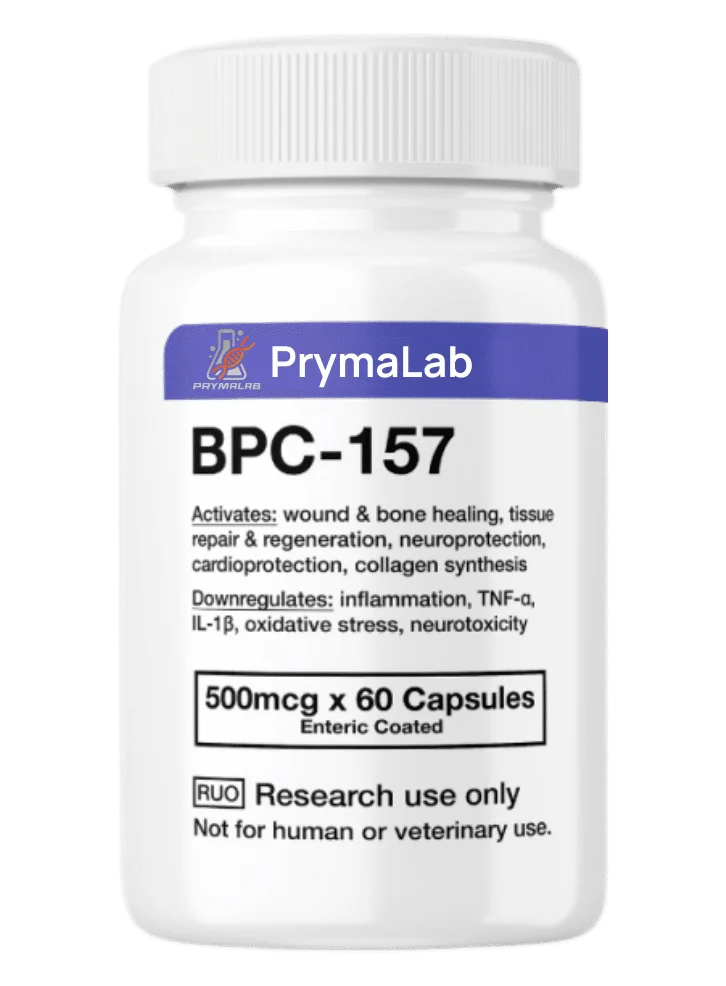
BPC-157 500 mcg Capsules
500 mcg per capsule, 60 capsules per bottle, 30 mg total. Capsule-lot COA included.
- BPC-157 per capsule
- 500 mcg
- Capsules per bottle
- 60
- Total BPC-157
- 30 mg
- Documented lot
- PL-2609-012
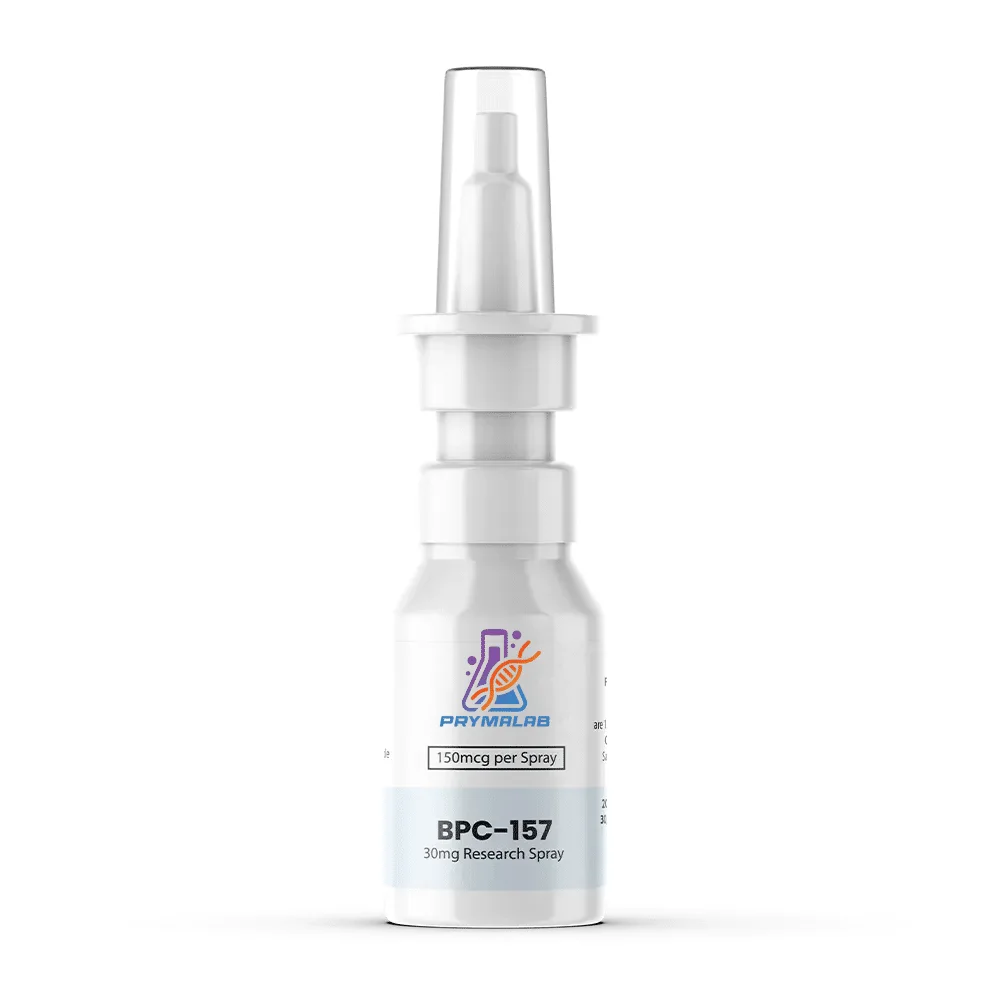
BPC-157 30 mg Spray
150 mcg per spray, 30 mg per bottle. Premixed liquid; no reconstitution required.
- BPC-157 per bottle
- 30 mg
- BPC-157 per spray
- 150 mcg
- Physical form
- Liquid spray
- Preparation
- Premixed
Ordering is not yet available. Product quantities describe the package contents; they do not establish an effective human dose.
What benefits do people look for with BPC-157?
The main questions concern joint comfort, tendon and ligament recovery, muscle injury, skin healing and gut symptoms. The strength of the evidence differs for each.
Which improvements have people reported?
Selected shoulder and elbow accounts describe less soreness, easier movement and better tolerance of training, with changes first noticed around weeks two to three.78 These are personal experiences with other preparations, not customer reviews of the products shown here.
Can BPC-157 help tendons and ligaments?
Rat tendon-cell experiments found changes in cell movement, tissue outgrowth and survival under stress. A separate rat ligament study examined healing after injury.12
These findings explain the research interest. They do not establish a recovery time or a proven treatment for a human tendon tear.
What has been reported for joint pain?
A retrospective knee-pain report recorded improvement in 11 of 12 people given BPC-157 alone. It involved intra-articular treatment and telephone follow-up.3
There was no control group or standardized functional testing. Pain improvement does not show that cartilage or a meniscus regenerated.
Does the research show muscle recovery?
A rat quadriceps-injury experiment reported improvements in mechanical strength, walking function and tissue findings.4
The model involved an injured muscle. It does not demonstrate muscle-building effects or a training advantage in healthy people.
What about BPC-157 for gut health?
Animal experiments have investigated colitis and intestinal healing.5 Human evidence reviewed by FDA is limited and formulation-specific.6
Those findings cannot establish that the featured oral capsules treat IBS, ulcerative colitis or another digestive condition.
Are skin-healing benefits established in people?
A rat alkali-burn experiment found faster wound closure after topical BPC-157 treatment.10 That is an animal skin-injury result. It does not establish scar removal, a cosmetic benefit or a human healing protocol. The benefits guide explains the study in context.
How might BPC-157 affect tissue repair?
One proposed mechanism involves FAK–paxillin signaling, a pathway studied in tendon-cell movement. That gives researchers a mechanism to investigate; it does not predict the outcome of a retail product in a person.1
BPC-157 benefits for joints, ligaments, skin and gut health ↗
Human-reported effects, timelines and original research.
What daily amounts and cycle lengths are reported?
Reported-use examples include 250 mcg per day and 500 mcg per day split into two amounts, over six weeks.78 No approved human dosing schedule has been established.
| Daily total | One week | Four weeks | Six weeks | Eight weeks |
|---|---|---|---|---|
| 250 mcg / 0.25 mg | 1.75 mg | 7 mg | 10.5 mg | 14 mg |
| 500 mcg / 0.5 mg | 3.5 mg | 14 mg | 21 mg | 28 mg |
How many 10 mg vials would those totals require?
A six-week total of 10.5 mg exceeds one 10 mg vial, so the package calculation rounds up to two vials. A 21 mg total rounds up to three vials. These figures exclude preparation losses and say nothing about the usable life of a mixed solution.
10,000 mcg ÷ 250 mcg = 40, before losses.
10,000 mcg ÷ 500 mcg = 20, before losses.
Does a longer cycle produce better results?
The accounts do not answer that. One described a plateau at roughly week four, while another described continuing changes through week six.78 Four- and eight-week totals help compare quantities; they do not validate those cycle lengths, a restart interval or a weight-based dose.
Read the full dosage and cycles guide ↗
Reported daily dosages, cycle quantities, preparation steps and concentration charts.
How do you calculate a 10 mg BPC-157 solution?
10 mg in a final volume of 2 mL = 5 mg/mL. Reconstitution changes the concentration by dissolving the powder in liquid. It does not change the total amount of peptide in the vial.
What are the laboratory preparation steps?
- Match the vial, report and preparation protocol.Check the product and lot. Use the compatible diluent specified for the laboratory protocol; no validated human-administration diluent is established by the product documents.
- Record the intended final volume.The 2 mL example is a concentration calculation. Record both the 10 mg contents and the final liquid volume so the calculation can be checked.
- Dissolve with appropriate aseptic handling.Add the specified diluent slowly along the vial wall, avoid shaking and let the powder dissolve before measuring the solution.
- Record the batch, concentration and preparation date.The supplied handling sheet specifies 2–8°C after reconstitution. It does not validate a fixed post-mixing use-by period. Open the original handling sheet ↗
BPC-157 concentration calculator
Enter the container amount, final liquid volume and an amount to convert. The result shows concentration, mL and U-100 volume markings.
Formula: volume in mL = amount in mcg ÷ (mg per mL × 1,000). U-100 markings mean 100 units per mL; they do not apply to pen clicks or every syringe. Calculation precision does not establish measurement accuracy or suitability for human injection.
| Final volume | Concentration | Volume for 250 mcg | U-100 markings |
|---|---|---|---|
| 1 mL | 10 mg/mL | 0.025 mL | 2.5 |
| 2 mL | 5 mg/mL | 0.05 mL | 5 |
| 3 mL | 3.333… mg/mL | 0.075 mL | 7.5 |
The 15 mg pen already contains 3 mL at 5 mg/mL. It needs no powder reconstitution. A pen-click amount requires device calibration; the U-100 numbers above cannot supply it.
Vial, pen, capsules or nasal spray: what changes?
Choose what you need to compare first: powder preparation, liquid concentration, premeasured contents or batch documentation. A format changes the practical details without establishing equivalent absorption.
| Format | Exact contents | Preparation | Key quantity question |
|---|---|---|---|
| Vial | 10 mg powder | Reconstitution required | What final volume gives the intended concentration? |
| Pen | 15 mg / 3 mL 5 mg/mL | Prefilled | What does this specific device deliver per setting? |
| Capsules | 500 mcg each 60 capsules / 30 mg | Premeasured solid format | Is the amount per capsule or per bottle? |
| Nasal spray | 150 mcg per spray 30 mg per bottle | Premixed | What pump instructions and finished-product tests are available? |
Can an oral or nasal amount be converted into an injected dose?
No validated human conversion is available. Capsule contents, spray output and a measured liquid amount describe different delivery routes; equal micrograms do not establish equal blood levels or effects.6
Does 30 mg mean the spray provides exactly 200 usable sprays?
30,000 mcg ÷ 150 mcg = 200 nominal spray amounts. That is package arithmetic. Priming and residual liquid can affect delivery, and the supplied specifications do not confirm the usable spray count or bottle volume.
How soon have people reported a change with BPC-157?
In two selected six-week accounts, changes were first noticed around weeks two to three. Their reports concern comfort and movement; neither verifies the outcome of a product sold on this site.
Shoulder soreness and overhead movement
Six-week accountThe account describes less lingering soreness during week two and easier movement with less pressing discomfort during week three. Improvement reportedly leveled off around week four and was still present nine weeks after finishing.
Elbow pain and restricted mobility
Six-week accountThe first BPC-only course was described as producing noticeable changes in weeks two to three, being nearly pain-free by week four and roughly 95% pain reduction with full mobility by week six.
These examples do not establish an average response, success rate or repaired injury on imaging. The full results guide also explains how to read mixed experiences and what a useful before-and-after comparison should record.
Explore BPC-157 before-and-after reports ↗
Actual changes in comfort, movement and training, with reported timing and follow-up.
What is in the Wolverine peptide stack?
Wolverine combines BPC-157 with TB-500. Always read the two ingredient amounts separately: the 20 mg vial contains 10 mg of each; the 40 mg pen contains 20 mg of each.
The combination is discussed for joint and soft-tissue recovery. In the small knee series, three of four recipients of BPC-157 plus thymosin beta-4 reported relief.3 That observation does not establish an advantage over BPC-157 alone or validate either commercial product below.
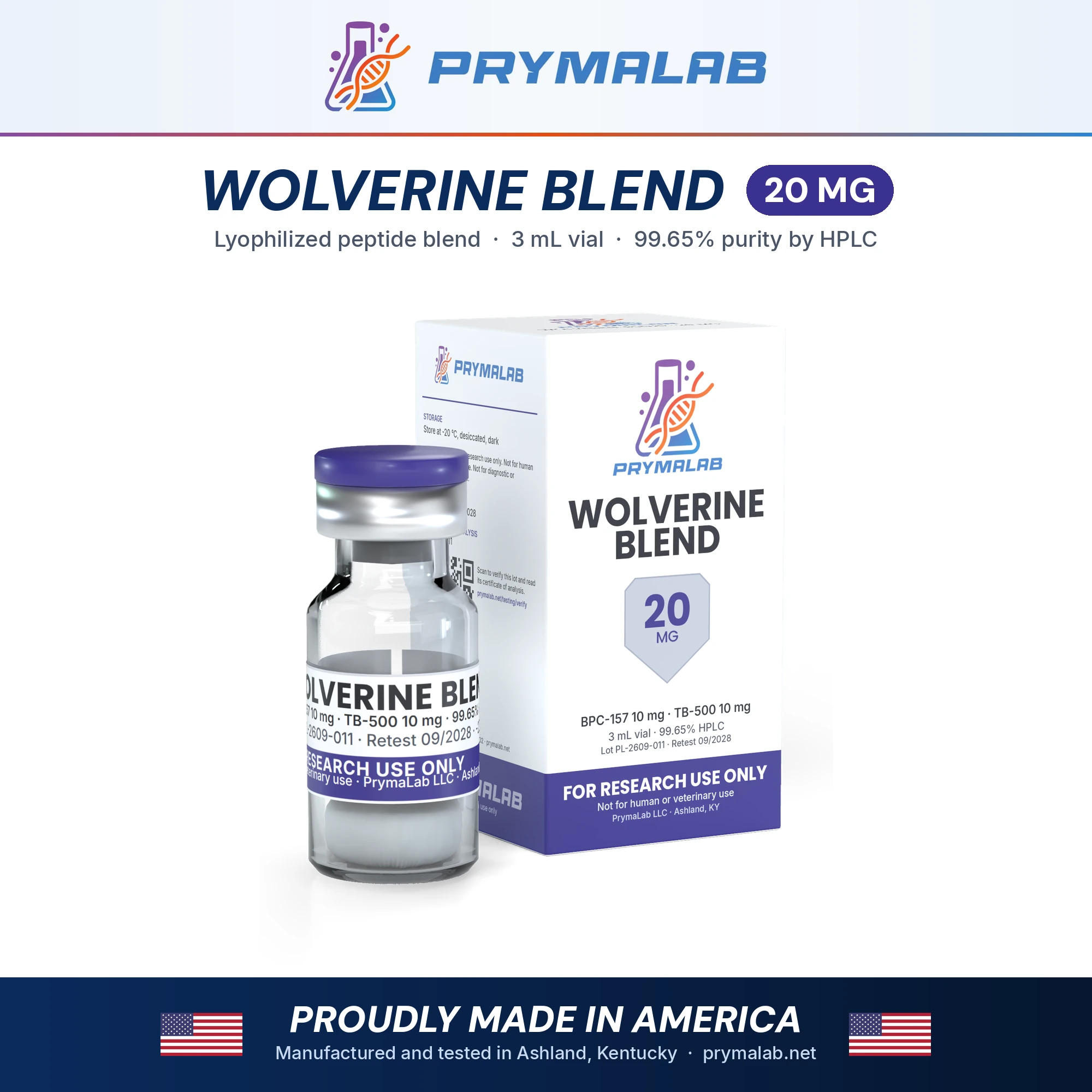
Wolverine 20 mg Vial
10 mg BPC-157 + 10 mg TB-500.
Freeze-dried, 1:1 blend by weight.
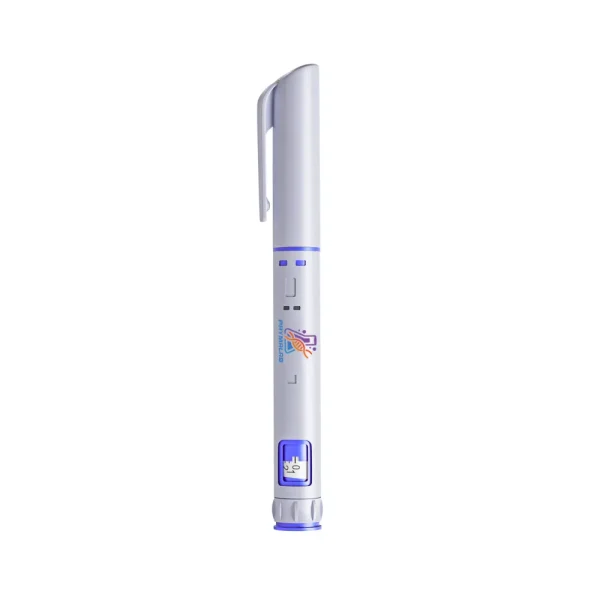
How much BPC-157 is in a combined blend amount?
Both featured products use a 1:1 ratio by weight. A 500 mcg combined amount contains 250 mcg BPC-157 and 250 mcg TB-500. The full stack guide includes a calculator that separates the ingredients, including unequal ratios.
Compare the 20 mg vial, the 40 mg pen and the original vial certificate.
Read the BPC-157 + TB-500 guide ↗
Daily and weekly reports, the 20 mg vial, 40 mg pen and blend calculator.
Which BPC-157 batches have certificates of analysis?
The 10 mg vial and 500 mcg capsules have separate in-house batch reports. Open the original PDFs below to check the product, lot, reported tests and issuer. The documents are preserved in their original form.
10 mg Vial Report
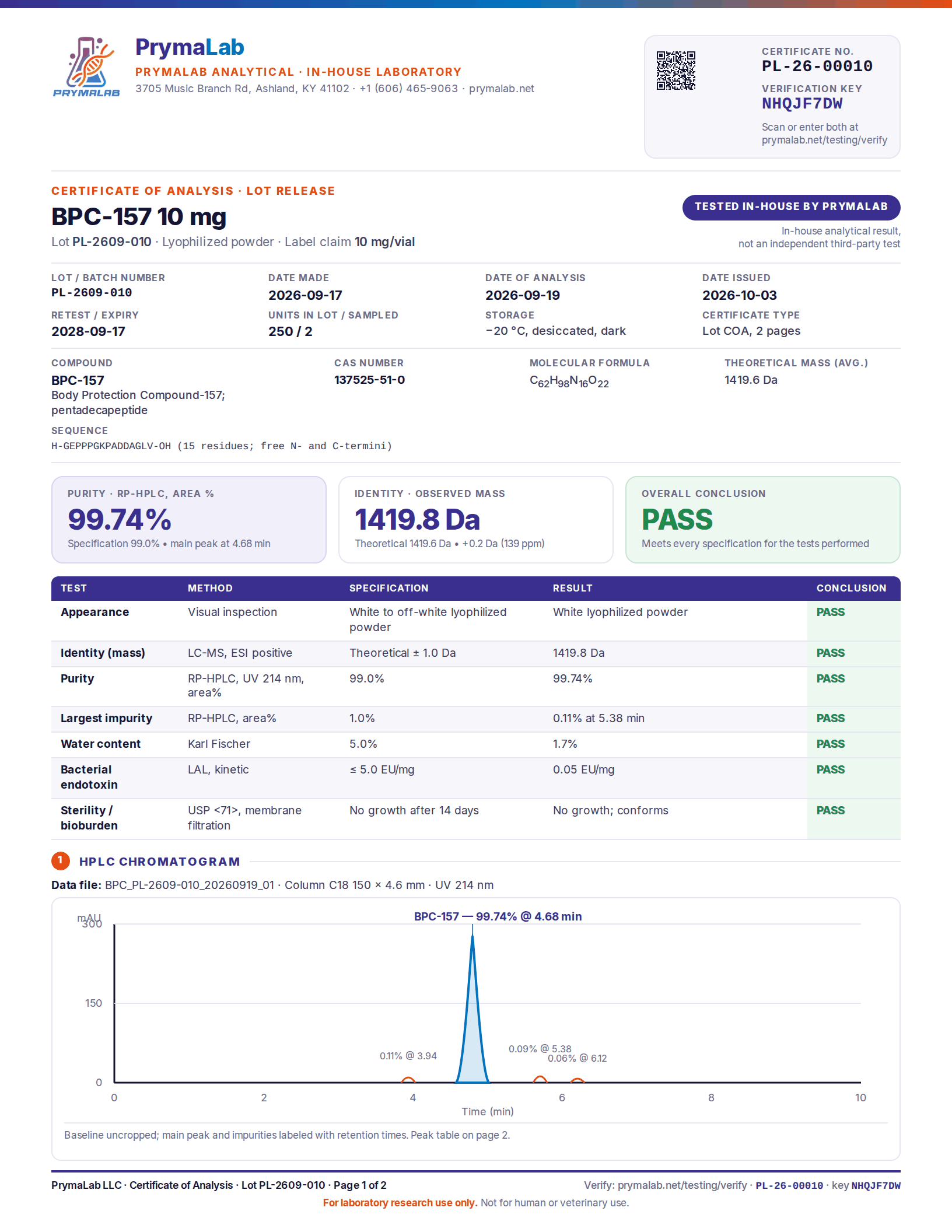
Includes identity and purity results, plus reported water, endotoxin and microbiology tests.
500 mcg Capsule Report
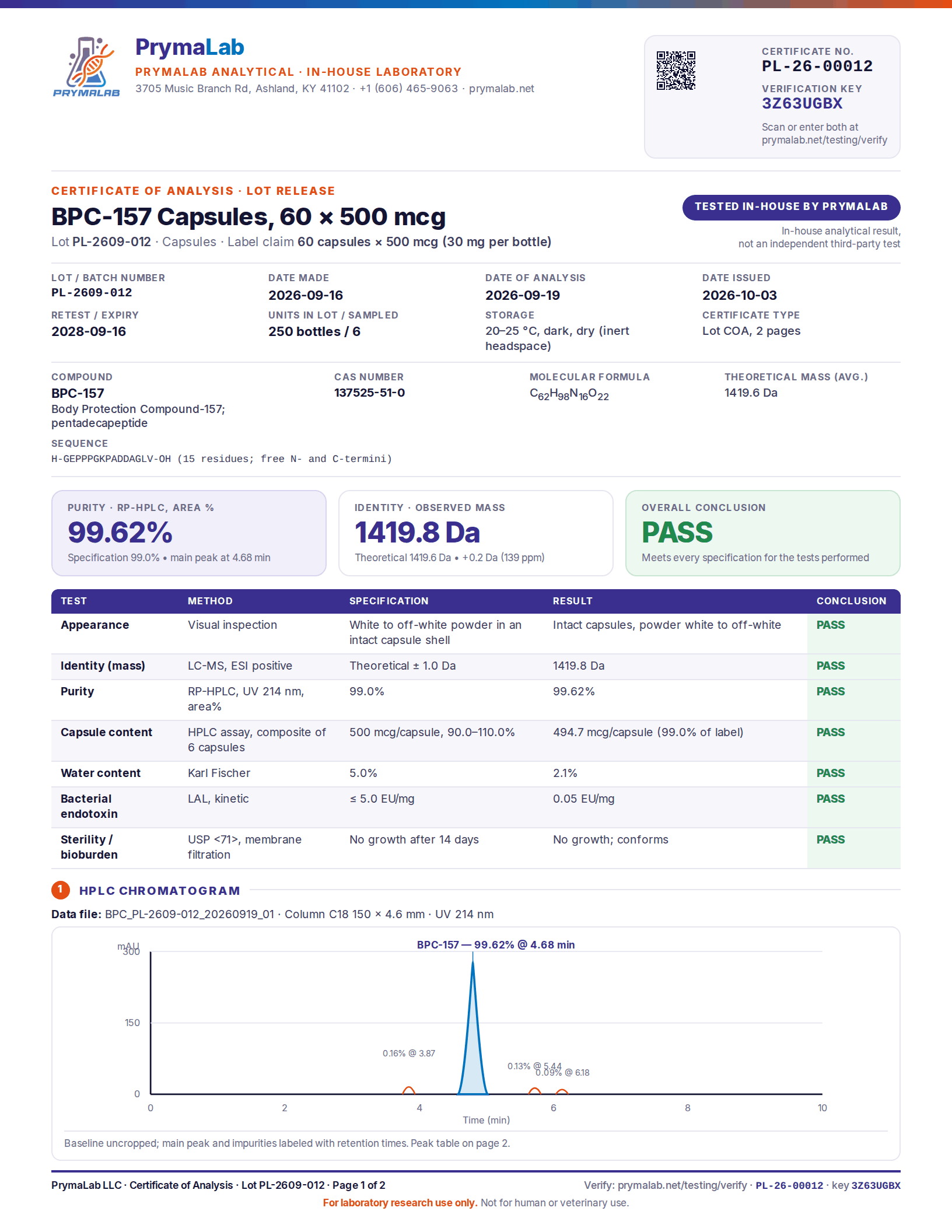
Reports a composite assay of six capsules averaging 494.7 mcg per capsule, 99.0% of the label claim.
Does HPLC purity confirm the amount in a container?
It measures peak-area purity in the tested sample. The capsule report also includes a separate content assay averaging 494.7 mcg per capsule from a six-capsule composite. The vial report does not include a separate assay verifying its labeled 10 mg contents.
These reports apply to their named lots and samples. They do not certify the finished pen or nasal spray. The Quality + COA guide covers the exact results and two printed report discrepancies that need issuer clarification.
Open the complete Quality + COA guide ↗
Original batch reports, exact test results and document coverage by product.
What should you check before choosing a product?
Compare format, total contents, current batch documentation and delivered cost. The same headline price can represent different amounts and preparation requirements.
| Check | What to look for |
|---|---|
| Total amount | 10 mg per vial, 15 mg per pen, 30 mg per capsule bottle or spray bottle. |
| Preparation | Powder versus prefilled liquid or a premeasured solid format. |
| Batch evidence | A report matching the actual lot and finished product being offered. |
| Full cost | Product price plus shipping and any applicable taxes. |
For a package-price comparison, divide the total cost by labeled milligrams. This compares quantity. It cannot establish equivalent absorption, effectiveness or value across different routes.
Compare the four product formats
Exact quantities, preparation details and original documents.
Compare all four BPC-157 products ↗
Vials, pens, capsules and nasal spray: labeled quantities, preparation and buying questions.
Is BPC-157 approved, and what safety information exists?
BPC-157 is not a component of an FDA-approved drug. FDA’s review describes gaps in human safety information and concerns involving immune reactions, peptide impurities and product characterization.69
Reported events reviewed by FDA include injection-site reactions and shortness of breath. The reports have limitations and do not prove BPC-157 caused each event.6 Reliable side-effect rates and long-term risks remain uncertain.
A compounding review, a high purity result or research-use labeling does not establish approval for human treatment. The safety guide explains the evidence, route-specific questions and current regulatory context.
Read the side effects and FDA status guide ↗
Reported reactions, format differences, cancer-related questions and current regulatory information.
BPC-157 quantities and preparation: common questions
How many portions are in a 10 mg vial?
By amount, 10 mg is 10,000 mcg: enough for 40 portions of 250 mcg or 20 portions of 500 mcg before losses. That is a quantity calculation, not a dosing recommendation or a post-mixing shelf life.
What concentration does 10 mg in 2 mL make?
It makes 5 mg/mL. At that concentration, 250 mcg occupies 0.05 mL and 500 mcg occupies 0.10 mL. The calculator recalculates these values when the final volume changes.
Does the 15 mg pen need mixing?
No. It contains 3 mL of prefilled solution at 5 mg/mL. Delivery per click or setting needs the actual device calibration; it cannot be inferred from a syringe chart.
How much BPC-157 is in a capsule bottle?
500 mcg per capsule × 60 capsules = 30,000 mcg, or 30 mg per bottle. The original capsule COA is separate from the vial report.
What is the strength of the nasal spray?
150 mcg per spray, 30 mg per bottle. The solution is premixed. The amount in a spray does not establish the amount absorbed, and the usable spray count is not confirmed.
How do BPC-157 and Wolverine quantities differ?
A single-ingredient BPC-157 amount refers to BPC-157 alone. In the 1:1 Wolverine blend, 500 mcg combined means 250 mcg BPC-157 plus 250 mcg TB-500.
Is there an established dose chart by body weight?
No validated consumer weight-based dosing chart is established. Reported schedules describe other people’s use; a calculator only converts the amount entered.
Where can I open the original COAs?
Open the vial COA or capsule COA. Both identify their lots and in-house test results. The quality guide explains what they cover.
Have a product, document or website question?
Include the page link and product format. For a report question, add the lot number and the specific result you want checked.
Contact details & enquiry guide ↗
Product-document questions, source corrections and privacy requests.
Where do these facts and reports come from?
Research links identify the study setting. Personal accounts remain individual reports, not verified customer reviews. Product quantities and test results come from the supplied labels and original documents.
- Chang et al. — BPC-157 and tendon-cell outgrowth, survival and migration.Journal of Applied Physiology, 2011. Rat tendon tissue and cell experiments.
- Cerovecki et al. — BPC-157 in rat ligament healing.Journal of Orthopaedic Research, 2010. Animal injury model.
- Lee & Padgett — Intra-articular BPC-157 for knee pain.Alternative Therapies in Health and Medicine, 2021. Retrospective report; 16 patients contacted.
- Staresinic et al. — BPC-157 in a rat quadriceps-injury model.Journal of Orthopaedic Research, 2006. Animal muscle-injury research.
- Klicek et al. — Experimental colitis and intestinal healing research.Journal of Physiology and Pharmacology, 2013. Animal models.
- FDA — BPC-157 briefing document for the Pharmacy Compounding Advisory Committee.2026 evaluation of available effectiveness, safety and product-characterization information.
- Public shoulder account — six weeks of BPC-157, with follow-up.Public first-person shoulder account. Rehabilitation and controlled training continued.
- Public elbow account — cycle duration and reported progress.Public first-person elbow account, February 12, 2024. The first BPC-only course is summarized.
- FDA — Bulk substances that may present significant safety risks.Includes immune-response and impurity concerns for BPC-157.
- Huang et al. — BPC-157 in alkali-burn wound healing.Drug Design, Development and Therapy, 2015. Rat skin-injury model and endothelial-cell experiments.